Just bought a home espresso machine or curious about one? This guide is for beginners who want a clear mental model of the pump, boiler, and group head without the jargon.
Understanding brew pressure, water temperature, and flow rate lets you fine‑tune grind size, tamping, and extraction time to get steady crema. The same fundamentals simplify cleaning and quick fixes.
In short, you’ll see how an espresso machine works and answer the question “How expresso Machine Works?” while gaining practical tips for consistent brewing and simple upkeep.
Core Components of an Espresso Machine
Now that the fundamentals are clear, let’s identify the hardware that turns water, coffee, and pressure into a shot.
- Boiler – heats the water to the optimal extraction temperature and keeps it stable while you pull a shot. In many machines the same vessel also supplies steam for milk frothing.
- Pump – creates the brew pressure (usually around 9 bar) that forces hot water through the coffee puck. A reliable pump delivers a steady flow rate, which is essential for consistent extraction.
- Group head – the metal housing that channels pressurized water from the pump into the portafilter. Its internal seals and shower screen distribute water evenly over the coffee bed.
- Portafilter – a handle‑mounted basket that holds the ground espresso. Once locked into the group head, it forms a sealed chamber where water meets the coffee at the right pressure and temperature.
- Steam wand – taps the boiler’s steam to heat and texture milk. Proper steam pressure and temperature are crucial for creating micro‑foam and a glossy crema on milk‑based drinks.
- Water reservoir – supplies fresh water to the boiler. A clean, full reservoir ensures the machine can maintain temperature and pressure without interruption.
- Controls – buttons, switches, or digital displays that let you set brew time, temperature, and steam output. Accurate controls let you fine‑tune flow rate and extraction for repeatable results.
The Physics Behind Espresso Extraction
When the pump forces water through the group head, three physical variables converge to extract coffee solubles: brew pressure, water temperature, and flow rate. The pump creates roughly nine bars of pressure, a level high enough to push hot water into the tightly packed coffee puck and dissolve oils and acids within 20‑30 seconds. Below this pressure the water would seep through too slowly, under‑extracting; above it, the channeling effect can strip delicate flavors.
Simultaneously, the boiler heats water to just below boiling, typically around 90‑96 °C. At this temperature the solubility of coffee compounds peaks, allowing sugars, lipids, and aromatic acids to dissolve rapidly without scorching the grounds. Too cool a brew leaves many solids undissolved, while water that is too hot extracts bitter compounds.
Flow rate is regulated by the machine’s brew time settings and the resistance of the tamped coffee bed. A balanced flow ensures that the water spends enough time (the “contact time”) to achieve a full extraction without over‑extraction.
The crema that tops a well‑drawn shot is a colloidal emulsion of coffee oils and carbon dioxide released under pressure. A thick, glossy crema signals that the pressure, temperature, and flow rate were all within the optimal range, confirming that the espresso extraction succeeded.
Step‑by‑Step Brewing Cycle
When you press the power button the machine’s internal controller begins a warm‑up sequence. The pump stays idle while a heating element raises the boiler temperature to the ideal range for espresso; most machines signal readiness with a light or audible cue.
Before the first shot, the system automatically flushes the group head. Water is forced through the portafilter without coffee, clearing any residual grounds and stabilising temperature across the brew chamber.
Once the boiler is at temperature, you lock the portafilter and start the brew cycle. The pump delivers a low‑pressure “pre‑infusion” pulse that gently wets the puck, allowing the coffee bed to swell evenly. After a few seconds the controller ramps up to full brew pressure, pushing hot water through the coffee at a controlled flow rate.
During full‑pressure extraction the machine monitors temperature and pressure, making micro‑adjustments to keep them within target limits. The shot ends automatically when the programmed volume or time is reached, and the pump shuts off, leaving a crema‑rich espresso in the cup.
Understanding each automatic stage helps you anticipate what the machine is doing, so you can focus on variables you can control—grind size, tamping pressure, and dose—to achieve consistent results.
Getting Consistent Results
To turn the variables you control into a repeatable espresso, treat each one as a dial on a balanced circuit. Finer grind increases resistance, which raises brew pressure and slows flow; coarser grind does the opposite. Adjust the dose (the amount of coffee in the portafilter) in tandem—more coffee compensates for a finer grind, while less coffee balances a coarser setting. Consistent tamp pressure creates an even puck, preventing channeling that would otherwise cause uneven extraction.
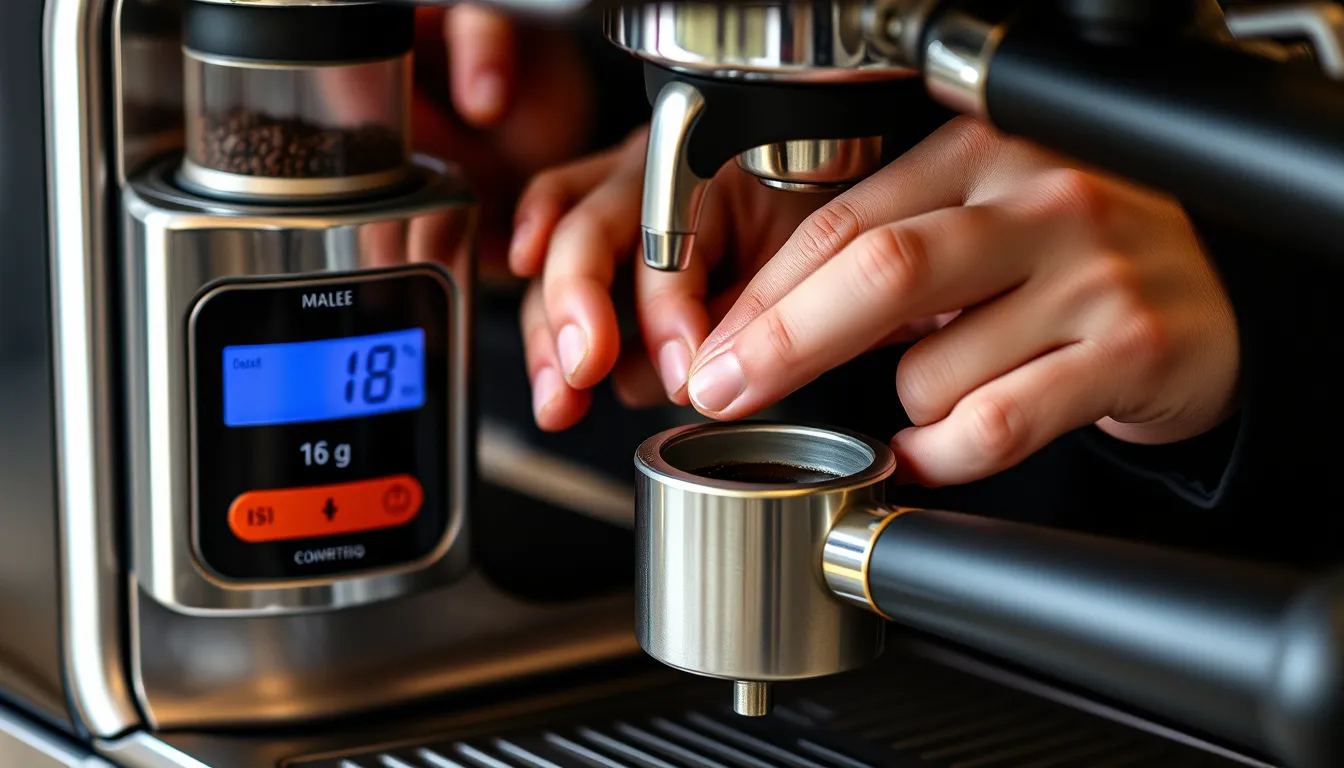
Practical dialing‑in routine:
- Start with a middle‑range grind and a dose of 18 g.
- Pull a shot and note the time and taste. If the shot runs too fast (<25 s) and tastes sour, fine‑tune the grind or increase the dose.
- If the shot drags (>35 s) and tastes bitter, coarsen the grind or reduce the dose.
- Keep tamp pressure steady—aim for a firm, level press, then repeat the pull.
- Fine‑adjust the machine’s temperature or pressure if the flavor profile stays off after grind and dose are settled.
Common taste clues and quick fixes:
- Sour / under‑extracted: finer grind, higher dose, or raise water temperature.
- Bitter / over‑extracted: coarser grind, lower dose, or lower temperature.
- Thin, watery, little crema: ensure the portafilter is fully locked, check that the pump reaches the target pressure, and verify the grind isn’t too coarse.
By iterating through these adjustments while keeping tamp pressure and machine settings stable, you create a repeatable formula that answers the question “How expresso Machine Works?” for your daily brew.
Basic Maintenance and Troubleshooting
Keeping the machine clean and the components in good shape is essential for reliable extraction. A quick daily routine and a more thorough weekly care schedule prevent buildup that can mask the underlying physics of how an espresso machine works.
Daily group‑head care
- Lock the portafilter in place, run a short 5‑second brew cycle, then discard the water.
- Wipe the shower screen and gasket with a damp cloth; a soft brush can remove any coffee puck residue.
- Backflush with a blind filter (if the machine has a three‑way valve) to clear the brew path.
Weekly descaling
- Prepare a descaling solution according to the manufacturer’s dilution ratio.
- Run the solution through the boiler and group head, then flush with fresh water until no taste remains.
- Rinse the steam wand and wipe the exterior.
Checking pump performance
- Observe the pressure gauge during a normal shot; it should reach the target pressure within a few seconds.
- If the reading stays low, listen for abnormal pump noise that may indicate wear.
Simple fixes for common issues
- Low pressure – clean the intake filter, ensure the water tank is full, and verify the pump’s inlet isn’t blocked.
- Channeling – re‑grind to a finer size, and inspect the basket for clogs.
- Missing crema – confirm the boiler maintains proper temperature, and check that the group head seals are intact.
Frequently Asked Questions
Below are quick answers to the most common doubts newcomers face when learning how an espresso machine works. Use them as a handy reference while you experiment.
Can I use any coffee grinder?
Any grinder that can produce a consistent, fine grind suitable for espresso will work, but burr grinders give far more repeatable results than blade models. Adjust the grind size until the shot pulls in roughly 25‑30 seconds.
What does a “dry” puck indicate?
A dry puck—one that feels crumbly and releases little moisture—usually means the water didn’t fully saturate the coffee. Check that the dose is correct, the grind isn’t too fine, and the tamp is even.
How often should I descale?
Descaling frequency depends on water hardness and usage. As a rule of thumb, run a descaling cycle every 2‑3 months for home use, or whenever you notice a drop in temperature stability.
Do I need a pressurized portafilter basket?
Pressurized baskets are forgiving for beginners because they create the necessary resistance even with a coarse grind. For optimal flavor and control, switch to a non‑pressurized basket once you master grind size and tamping.
Why does my shot taste bitter?
Bitter notes often stem from over‑extraction: grind too fine, brew too long, or use water that’s hotter than the ideal 90‑96 °C range. Try a coarser setting and shorten the extraction time.